Ad hoc arbitration · Danish Institute of Arbitration
Arbitrator in Danish arbitration proceedings
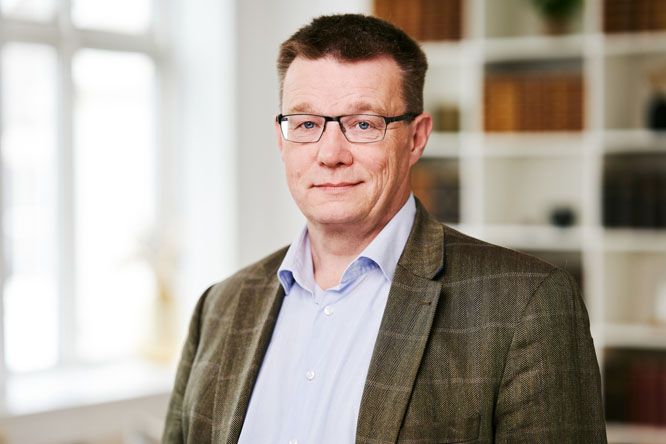
Henrik Mansfeldt Witt, Advokat (H) – attorney admitted to the Supreme Court of Denmark. Arbitrator in ad hoc proceedings and in cases under the Danish Institute of Arbitration (Voldgiftsinstituttet).
Parties choose arbitration because they want a confidential, expert and efficient decision. As an arbitrator I focus on tight and fair proceedings, clear and comprehensible reasoning, and on ensuring that the advantages of arbitration are also felt when the costs of the case are allocated.
Appointed as sole arbitrator, chair and party-appointed arbitrator · Advokat (H) · 25+ years of commercial law experience
- Advokat (H), rights of audience before the Supreme Court
- More than 25 years of commercial law experience
- Languages: Danish, English and Swedish
- Conflict checks answered promptly
Choosing an arbitrator
How to choose the right arbitrator
The Danish Arbitration Act gives the parties wide freedom to agree how the arbitrator is appointed (section 11). That freedom is a strength – but it also places responsibility for the right choice on the parties. Danish practice and international user surveys point to the same decisive factors:
Legal and industry insight
An arbitrator who understands both the law and the reality the dispute arises from – saving time because the case does not need to be explained from scratch.
Independence and impartiality
Ongoing disclosure of any circumstance likely to give rise to justifiable doubts (section 12), handled systematically under the IBA Guidelines on Conflicts of Interest – protecting the award against later challenge.
Genuine availability and pace
A skilled arbitrator is only useful if he has the time to prioritise the case and keep to the timetable.
Experience and enforceable awards
Experience as an arbitrator – not only as counsel – and a clear, well-reasoned and enforceable award.
Profile
Personal profile
I am a Danish attorney admitted to the Supreme Court (Advokat (H)) with more than 25 years of experience as a commercial lawyer, with IT, digitalisation and intellectual property as my core field. I have served as arbitrator in a number of cases – both in ad hoc arbitration and under the Danish Institute of Arbitration.
As an arbitrator, legal insight is often not enough. Many disputes can only be decided properly if one understands the commercial realities behind them. I have that understanding not only as an adviser: I am a founder and co-owner of several companies and have for many years served as chair and member of the board of owner-managed companies.
For a number of years I taught on board education programmes, including at CBS Executive, on the responsibilities and dilemmas that come with board work. I bring that background into the arbitration.
- Title
- Advokat (H), Supreme Court attorney
- Firm
- EPIC Advokater
- Experience
- More than 20 years as an IT lawyer
- Roles
- Sole arbitrator, party-appointed arbitrator, chair
- Languages
- Danish, English and Swedish
Areas of expertise
Disputes I am particularly suited for
IT, digitalisation and IP rights
Disputes on deliveries, agile development, operational disruption, termination and rights to code and data. More than 20 years as an IT lawyer, including the use of AI, combined with practical, commercial and teaching experience.
Shareholder agreements
Interpretation and enforcement of shareholder agreements, including good leaver and bad leaver provisions, exit, pre-emption rights, valuation mechanisms and breach in owner-managed companies.
Employment cases with digital evidence
Dismissals, summary dismissals and non-compete clauses where the key evidence is digital: log files, e-mails, system access and electronic traces assessed on their technical content.
GDPR and use of data
Data protection as a subject of dispute: allocation of liability between controller and processor, third-country transfers, use of data in product development and AI, and the consequences of non-compliance.
Quantification of loss
Structured assessment of loss, causation and foreseeability, limitation of liability clauses – and not least the duty to mitigate loss.
Commercial agreements
Breach, termination and subsequent settlement in long-term commercial relationships, where the economics of the agreement and the parties' business models matter to the outcome.
Selected cases (anonymised)
Shareholder agreement
Breach of shareholder agreement
Whether a former business partner was entitled to compensation for breach of a shareholder agreement.
- Role: party-appointed arbitrator, panel of 3
- Rules: ad hoc arbitration
Shareholder agreement
Bad leaver dispute
Whether a shareholder was to be regarded as a bad leaver.
- Role: party-appointed arbitrator, panel of 3
- Rules: Danish Institute of Arbitration
Employment
Summary dismissal of a managing director
The case concerned the summary dismissal of a managing director and relied largely on IT-related evidence, including legal hold on e-mails and expert opinions. The case was initially conducted in English.
- Role: party-appointed arbitrator, panel of 3
- Rules: Danish Institute of Arbitration
Process
How an ad hoc arbitration may proceed
An ad hoc arbitration is conducted without an institution as administrator. This gives great flexibility, but makes it important that the appointment, the finances and the procedure are clearly framed from the outset. To the extent the arbitration agreement or later agreements between the parties do not regulate a matter, the Danish Arbitration Act applies.
Enquiry and conflict check
Before accepting, I receive the names of the parties, affiliated companies, counsel, witnesses and experts, carry out a conflict check and provide a written declaration of independence and impartiality.
Appointment and constitution
The appointment follows the arbitration agreement, the procedure agreed by the parties or the Arbitration Act. Once all arbitrators have accepted, the tribunal is constituted.
Framework and procedural timetable
The parties and the tribunal settle the size of the deposit, communication, document handling, language, seat and procedural rules, and agree a realistic timetable at a case management conference.
Written submissions and evidence
The scope is tailored to what is actually in dispute. Procedural disagreements are resolved early so the case keeps direction and momentum.
Oral hearing
Held in person, online or in a hybrid format, with a clear structure and equal opportunity for both parties to present their case and examine witnesses and experts.
Award and costs
The award is rendered within the agreed time frame, sets out the result and the main reasons, and decides the costs of the arbitration and their allocation.
I accept a limited number of cases at a time and confirm independence and available capacity within 3 working days of an enquiry. Current capacity: able to take on further cases starting within 10 working days.
Independence
Independence, impartiality, confidentiality and data security
Independence is clarified first. I carry out systematic conflict checks and disclose – before and throughout the case – any circumstance likely to give rise to justifiable doubts as to my impartiality or independence, cf. section 12 of the Danish Arbitration Act, assessed under the IBA Guidelines on Conflicts of Interest in International Arbitration.
Party appointment
Party appointment does not affect independence. I sit on the tribunal on an entirely equal footing and have no contact with the appointing party after the appointment concerning the merits of the case.
Conflict check
I need the names of the parties, affiliated companies, counsel and expected key witnesses. Please do not send case material until independence has been confirmed.
Confidentiality
All material and information in the case is treated as confidential, also after the case has ended, including the very existence of the case unless the parties agree otherwise.
Background
Memberships
- Danish Arbitration Association (Dansk Forening for Voldgift)
- Danske Advokater
- Øresundsadvokaterne
- Dansk IT
- VL 57
FAQ
Questions and answers
- How are you appointed as arbitrator?
- By joint agreement of the parties, by party appointment in a three-member tribunal, or through the Danish Institute of Arbitration. In every case: conflict check first, then agreement on time frame and fee principles.
- What should I send initially?
- Only what is needed for a conflict check: parties, affiliated companies, counsel and expected key witnesses, plus a brief description of the dispute. Not the exhibits.
- Can the case be conducted in English or Swedish?
- Yes. The case can be conducted in Danish, English or Swedish, including exhibits in these languages.
- How do you view costs?
- Costs in arbitration should reflect the actual, reasonable costs incurred rather than the standardised rates of the courts. This requires the parties to document their costs so that their necessity can be assessed.
Contact
Request an appointment
Fill in the information needed for a conflict check. I will reply in writing.
Please do not send extensive or confidential case material until a conflict check has been completed and independence confirmed. Provide only names and a brief description of the dispute.
Material is handled confidentially and securely.